H�2�
$�GIY 简介:
FRED作为COM组件可以实现与Excel、VB、
Matlab等调用来完成庞大的计算任务或画图,本文的目的是通过运行一个案例来实现与Matlab的相互调用,在此我们需要借助脚本来完成,此脚本为视为通用型脚本。
%=?c�ZfFqO �ua�5�O�Gx 配置:在执行调用之前,我们需要在Matlab命令行窗口输入如下命令:
���DA2}{� enableservice('AutomationServer', true)
B�Nd^�qB ? enableservice('AutomationServer')
{?J/c{=/P� 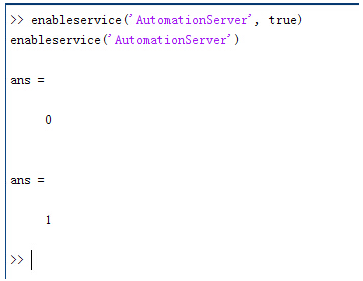 krs�Yog(^z
 结果输出为1,这种操作方式保证了当前的Matlab实体可以用于
通信。
GP�&�vLt51 �0�Z0�:,!� 在winwrp界面,为增加和使用Matlab类型的目录库,我们需要如下步骤:
pGf@z:^{*- 1. 在FRED脚本编辑界面找到参考.
wY�~&Q}U�� 2. 找到Matlab Automation Server Type Library
uq,
�{�t�V 3. 将名字改为MLAPP
~4s'0�� w^ ,0E{h}(� taFn![}/!g 在Matlab里面有两种常用的数据发送选项PutWorkspaceData 及PutFullMatrix,PutWorkspaceData适用于存储一般的数据在工作区,并赋予其为变量,PutFullMatrix试用于复数数据。
H^.IY_I`U* 图 编辑/参考
�t�Z�`��z d}JP!xf��% EL8NZ�%:v: 现在将脚本代码公布如下,此脚本执行如下几个步骤:
6B��@CurgB 1. 创建Matlab服务器。
AC;V
m: @{ 2. 移动探测面对于前一聚焦面的位置。
^�5A
t?I8� 3. 在探测面追迹
光线 +h�E(�Ra�# 4. 在探测面计算
照度 �Eh =~T��9 5. 使用PutWorkspaceData发送照度数据到Matlab
A�JSx%?h:6 6. 使用PutFullMatrix发送标量场数据到Matlab中
cs1l~b���l 7. 用Matlab画出照度数据
�]d��a^xWK 8. 在Matlab计算照度平均值
U5-@2Y�c�H 9. 返回数据到FRED中
i&vaeP25�) n��>A98N�Q 代码分享:
%H]lGN�)�� UTf�9S>H�S Option Explicit
H�cedE3�Rg �H�"C�[&r� Sub Main
6I!7c��^]t I!��>\#K Dim ana As T_ANALYSIS
�mcn 2W�t� Dim move As T_OPERATION
txcf�=)@>V Dim Matlab As MLApp.MLApp
/}L��t�,9� Dim detNode As Long, detSurfNode As Long, anaSurfNode As Long
_UT�$,0u_i Dim raysUsed As Long, nXpx As Long, nYpx As Long
3���/b;7\M Dim irrad() As Double, imagData() As Double, reals() As Double, imags() As Double
��/Nr�*�`l Dim z As Double, xMin As Double, xMax As Double, yMin As Double, yMax As Double
�4'6`Ll|iq Dim meanVal As Variant
,_X�/Gb6�) >0�dv+8Mn Set Matlab = CreateObject("Matlab.Application")
>IX/<
{);M C�B�DG�./� ClearOutputWindow
u{FD�d�R9< �+<}0|Xl&� 'Find the node numbers for the entities being used.
!A>z(eIsv` detNode = FindFullName("Geometry.Screen")
u���~3%bJ] detSurfNode = FindFullName("Geometry.Screen.Surf 1")
k51Eyy50�( anaSurfNode = FindFullName("Analysis Surface(s).Analysis 1")
9�_Q�P�!, @&]#u�Rl|[ 'Load the properties of the analysis surface being used.
8�ZCoc�5 LoadAnalysis anaSurfNode, ana
�Q�T9n,lX� t�^�[8R�hD 'Move the detector custom element to the desired z position.
�M�.nv�B)� z = 50
Up:�<=Kgci GetOperation detNode,1,move
u�(OW gbA3 move.Type = "Shift"
A<6%r7&B'� move.val3 = z
WWL���4`s� SetOperation detNode,1,move
f��Z�xIY,� Print "New screen position, z = " &z
=�
pI?��A^ #U*_1P0�h� 'Update the model and trace rays.
P�G8�^.)]M EnableTextPrinting (False)
`xz<��>g9e Update
TZt��jbD>B DeleteRays
�}�Bi�iE%a TraceCreateDraw
-tnQCwq# EnableTextPrinting (True)
'S2b��p4G� �r?�CI�)Y; 'Calculate the irradiance for rays on the detector surface.
D��;I6Q1I� raysUsed = Irradiance( detSurfNode, -1, ana, irrad )
P_c,BlfGMH Print raysUsed & " rays were included in the irradiance calculation.
sP-�^~� pp l�^d[EL�+ 'When using real number data to send to MATLAB, it is simplest to use PutWorkspaceData.
ltkI}h,e� Matlab.PutWorkspaceData("irradiance_pwd","base",irrad)
��ur�vd�uE 2��o#,kGd 'PutFullMatrix is more useful when actually having complex data such as with
sHcT�d>xS 'scalar wavefield, for example. Note that the scalarfield array in MATLAB
�I+ �es�8 'is a complex valued array.
6G}+gq�b�X raysUsed = ScalarField ( detSurfNode, -1, ana, reals, imags )
bsd�99-_(4 Matlab.PutFullMatrix("scalarfield","base", reals, imags )
Y-'78�B�Jk Print raysUsed & " rays were included in the scalar field calculation."
E�wS!]h�? i5>�+}$1 'Calculate plot characteristics from the T_ANALYSIS structure. This information is used
G60R9y�47c 'to customize the plot figure.
Iy�d?|f" xMin = ana.posX+ana.AcellX*(ana.Amin-0.5)
��/T��,Z>R xMax = ana.posX+ana.AcellX*(ana.Amax+0.5)
^m/14MN|� yMin = ana.posY+ana.BcellY*(ana.Bmin-0.5)
$5L0.�$�Tj yMax = ana.posY+ana.BcellY*(ana.Bmax+0.5)
MG ��/,�== nXpx = ana.Amax-ana.Amin+1
�BS�q)RV/3 nYpx = ana.Bmax-ana.Bmin+1
\�uM�E+N�F k'$!(*]\�b 'Plot the data in Matlab with some parameters calculated from the T_ANALYSIS
}�n7t�h��� 'structure. Set the axes labels, title, colorbar and plot view.
?��<Y+p�eu Matlab.Execute( "figure; surf(linspace("&xMin &","&xMax &","&nXpx &"),linspace("& yMin &"," & yMax & "," & nYpx & "),irradiance_pwd, 'EdgeColor', 'None');" )
kD) $2�I�? Matlab.Execute( "xlabel('X Position (" & GetUnits() & ")')" ) : Matlab.Execute( "ylabel('Y Position (" & GetUnits() & ")')" ) : Matlab.Execute( "zLabel( 'Irradiance' )" )
2Bk$�� lx7 Matlab.Execute( "title('Detector Irradiance')" )
;�f,c't@w� Matlab.Execute( "colorbar" )
�QRLJ_W^&u Matlab.Execute( "view(2)" )
�bS
>0DU � Print ""
�+�3i��7D� Print "Matlab figure plotted..."
c�9�j*n;Q� /H�:I 68~� 'Have Matlab calculate and return the mean value.
q!f1~�a�G Matlab.Execute( "irrad = mean(mean(irradiance_pwd));" )
XhdSFxW}�� Matlab.GetWorkspaceData( "irrad", "base", meanVal )
:�K�?0e��` Print "The mean irradiance value calculated by Matlab is: " & meanVal
GHF_R�,��7 @<M*qK1h� 'Release resources
4f~["[�*ea Set Matlab = Nothing
$|���$e% � FuX� 8�v End Sub
�m,�')&{Rd Dml*T(�WM> 最后在Matlab画图如下:
�j5�Un���1 +Z!;�P
Z6 并在工作区保存了数据:
|3K)�$.6�~ 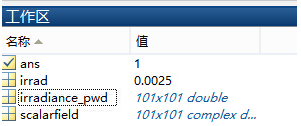 F8�e<}v&7R
 并返回平均值:
w6��2=06`@ ��0Q593F 与FRED中计算的照度图对比:
hNXBVI�L<& E�3a_8@ZB7 例:
~�#}Dx
:HH `>D9P_Y"jI 此例
系统数据,可按照此数据建立
模型 �5F�C4@Ms` cgC\mM4Nla 系统数据
w:o-klKX�Y X�E}H�3/2 Ip}Vb��6} 光源数据:
&X�`u9� �V Type: Laser Beam(Gaussian 00 mode)
:L�0/V~��D Beam size: 5;
�]WJ�fgN�4 Grid size: 12;
(�1pE�Eq84 Sample pts: 100;
%Y4e9T��". 相干光;
�W[NEe,�.> 波长0.5876微米,
|m,VTViv;i 距离原点沿着Z轴负方向25mm。
n,P5�o_^:� �{�OT:3SS7 对于执行代码,如果想保存图片,请在开始之前一定要执行如下代码:
1u]P4�G�f= enableservice('AutomationServer', true)
!c<wS�Q�, enableservice('AutomationServer')


